Sunday Salon, Blog Awards, and an Odd Assortment of Thoughts

I woke up this morning to receive a beautiful blog award from Gautami, and I am honored.
Blog Award This is my first blog award, and what a great way to kick-start my day.

To be properly honored, I must pass the award on to seven of my favorite bloggers, so here goes:
1. All the Roadrunning
2. The Ethical Exhibitionist
3. Bold. Blue. Adventure.
4. Switched at Birth
5. Take Time to Smell the Coffee
6. The Daily Warrior
7. Dog Ear Diary

This group of blogs includes some (but not all of my favorites), and if I was looking for a theme, it would be that these people have taken a passion in life and have lived it. I admire that. And I hope they will pass on this award to their favorites by following these guidelines:

Rules for next recipients of the Brilliante Weblog Premio are as follows:
1. The award may be displayed on a winner’s blog.
2. Add a link to the person you received the award from.
3. Nominate up to seven other blogs.
4. Add their links to your blog.
5. Add a message to each person that you have passed the award on in the comments section of their blog.

So in addition to reading blogs this week, I’m still working through McCain’s biography since I’m teaching some of it in class. The first 100 or so pages are really bad, poorly written and not very interesting. . . but now I’m reading about his time as a POW, and that section is horribly intriguing. I’m not that I’m ready to make the leap that because he survived years as a POW he should be president, but I do appreciate his strength in a new way now. That said, I would still recommend Obama’s book 200 times more than McCain’s simply because it’s a much better piece of writing.

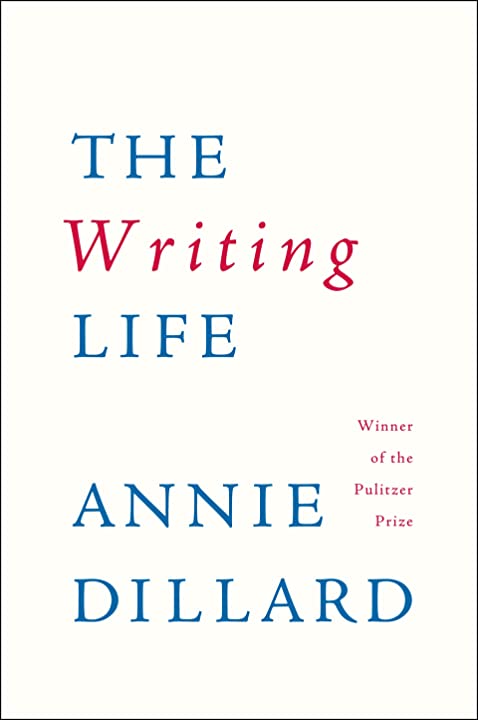
I’m also reading more Annie Dillard essays and pondering a return to Tinker Creek. I have hated that book every time I’ve tried to read it before, but now, I think I might appreciate it in new ways. What do you guys think of it?

Now, I’m off to watch the nursery at church. Nothing like scores of little babies to make a girl’s day.

Guest Reviews with Gratitude

A few weeks ago, I asked for some help with reviewing my ARCs, and you guys stepped up. The first two of these reviews are below. Many thanks to C.B. and to WordLily for these well-written and thoughtful ponderings on these two volumes. Please visit their blogs sometime and give them some lovin’.

Heavier Than Air by Nona Caspers

A farm girl becomes too attached to another, a youngster obsessed with John F. Kennedy takes her brother on a fateful boat ride, a father recovers from a stroke, one woman is abandoned by her lover, a mother dies–the stories that make up “Heavier Than Air” by Nona Caspers paint an intimate portrait of small town America, even when they take place in the big city. Her characters are so rooted in the rural countryside, that they take it with them when the move away. You can’t escape your family, not when your roots are deep.

The best of the stories in “Heavier Than Air,” Nona Caspers new volume of short stories, are about farm girls. Ms. Caspers clearly has a great affinity for the experience of growing up in rural America; it shows in both the depth of her understanding and her empathy for her characters. She understands the way Carson McCullers understands. In “Country Girls” the fourteen year old narrator moves to a Minnesota farming town where she begins to fall in love with Cynthia, the girl who lives on the neighboring farm. The young narrator is mystified by love. She wonders why her father married her mother not her aunt whom he seems to prefer; she becomes interested then obsessed with Cynthia’s family, and in the end publicly declares her love for a horrified Cynthia at the town dance. What does one do after that?

Outsider girls grab Ms. Caspers’ attention in “La Maison de Madame Durard.” Two young women spend a night trying to have some fun. They end up driving around with two guys they meet in a bar whom they later abandon by the road as they slowly discover their true interest is in each other. This same type of girl can be found at a younger age in “Wide Like an Eagle’s Wings” and all grown up in “The EE Cry” and “Mother”. Ms. Caspers writes about other types of people, writes about them well, but it’s these girls and the women they become who stay with the reader long after their stories end.

In “Mother” a young woman, Deborah, is abandoned by her lover, who simply states that she is in love with someone else and can’t stop it. Deborah calls her mother who comes out to San Francisco from Minnesota to help Deborah find a new apartment and to visit the city for the first and probably only time. Deborah’s mother liked her ex-lover, thought she was a charmed girl and said so. She does not seem to know what to do with Deborah now that she is single, now that she has to face her without someone to divert them both and provide each with a safe distance. Mother and daughter visit a series of bad apartments and begin to grow on each other’s nerves even as they begin to grow on each other. There is some unfinished business between them, some few things that now separate them much more than either ever thought possible. In the end, there is a small epiphany, a moment when Deborah really sees her mother and loves her as she is, fully aware of how alike the two of them are. Many of us only get these small epiphanies. Ms. Caspers understands how important they are.

The is much to enjoy in Heavier Than Air by Nona Caspers, and many rewards to be found in its pages. I’m giving the book four out of five stars. I look forward to her next volume.

**************************
The Reluctant Colonel by Michael J. Merry

The 618-page ARC of The Reluctant Colonel by Michael J. Merry AndiLit sent to me, WordLily.

Set in the fictional Central American country of Maraguay, The Reluctant Colonel relates the story of a 1964 coup, its leaders and their ensuing efforts of setting up a new government. I did feel hampered by my lack of historical knowledge of the time period, though; perhaps the book would be helped by a brief overview of the historical setting, from real life. I felt Merry might have had a political message, but I wasn’t educated enough about the time he wrote about to recognize it.

Some of the points I make here certainly reflect on the self-publishing platform, BookSurge, rather than on the author.

I like how much space the interior pages have, and how large the text is, but actually the text might be a bit too big. Six hundred-plus pages is enough to be daunting to some readers. Making the font slightly smaller, along with a couple other changes (see below), would not only make the book less daunting, it would also decrease production cost of the physical product.

By the third chapter I wondered if this — with all its brief chapters and snippets from different periods of time — would be a better short story collection, with the same characters recurring. It seems there are just too many interruptions, especially early on. (This solution didn’t plausible later.) I also felt disoriented, because of the numerous flashbacks to various points in time, never knowing what year it was. Perhaps BookSurge didn’t allow Merry to add these notations?

I did get into the story once I was about 100 pages into The Reluctant Colonel. The story, as it directly relates to the coup and its aftermath, is quite nice.

I dislike the crass language and views of women in the book. It’s degrading, and not in the least funny. As I try to see this from the writer’s perspective, I think these interludes were probably intended as comedic breaks from the intense action? I would much prefer, though, that the action continue straight through, without these awful chapters.

It really needs to be edited. Words can be removed, which shortens the work. Rewording in places could eliminate the stilted feeling on some pages. This is so important. There are also problems with capitalization (mostly words being capitalized when they shouldn’t be), punctuation, and with how Spanish words are thrown in and handled.

These problems really kept me from enjoying the book as much as I could have. Perhaps some of these issues were addressed before the final copy was produced. However, I’m somewhat doubtful that they were, since I ignored for this review the corrections that were found and submitted to BookSurge (presumably by the author?), according to a printed sheet tucked inside the pages. Regardless, I hope they were fixed.

Thanks again for these great reviews, and if you’d ever like to guest review a book on my blog, please let me know. I don’t get to read as much “fun” stuff once the school year begins, so I’d love to get more reviews up here. Just drop me a note at andilit at gmail.com.

Living Like Weasels In the Academy and Out

Yesterday, I spent precisely two hours and fifty minutes teaching; I dedicated about an hour or so to prepping my classes (I had done some prep the day before); and I spent five and a half hours doing stuff for the college. Some of that “stuff” I really enjoy, like planning the Speakers Series that my colleague and I created, but a lot of it – like dealing with our accreditation and navigating the politics and egos around that – I loathe. I simply think people should say what they mean and mean what they say and that there’s a great value to listening deeply and considering other people’s perspectives on things – but it seems to me, at least at my institution, that we are incapable of doing so. We seem to want to stake out our territory, pee around it, and then guard it ferociously with growls and grunts. A pack of hyenas come to mind . . .

That make seem harsh, and it probably is, but more and more I find myself wishing that I could simply teach. I love my students; I love talking with him, hearing about their days, and helping them become more of the people they were created to be. Yesterday, one of my students told me that her roller derby name (yes, she “plays” roller derby) is Jodi Wan Kenobi – isn’t that awesome? And some of my creative writing students talked about how they simply wanted to write, wanted to get more disciplined at it, wanted to access that part of themselves that is only activated when we sink deeply into something we do that’s creative. . . these moments are why I teach, not Board meetings or accreditations; I teach because I love students. So when people start getting petty and controlling, I find myself wondering how that helps us better serve our students . . . .

So this morning, as I was trying to stay in my writing practice and not fume over work (it didn’t really happen obviously), I decided to read something creative, and I grabbed Dillard’s Teaching a Stone to Talk off the shelf. (By the way, if you haven’t read the title essay in this collection, stop whatever it is you’re doing and go get it.) The first essay in this collection is “Living Like Weasels,” a piece that is highly anthologized and very accessible, so I reread it this morning, and here’s the passage that struck me:

Could two live [Dillard and the weasel] that way? Could two live under the wild rose, and explore by the pond, so that the smooth mind of each is as everywhere present to the other, and as received and as unchallenged, as falling snow?
We could, you know. We can live any way we want. People take vows of poverty, chastity, and obedience — even of silence — by choice. The thing is to stalk your calling in a certain skilled and supple way, to locate the most tender and live spot and plug into that pulse. This is yielding, not fighting. A weasel doesn’t “attack” anything; a weasel lives as he’s meant to, yielding at every moment to the perfect freedom of single necessity.

As I finished this paragraph, I felt the knot in my stomach give, my breathing ease, and my balance return. To accept what comes and to stalk your calling . . . that’s it, right? That’s it.

So today, I challenge you – my friends – to stalk your calling, to live into who you are more fully. And to love life for all the glory and pain that it is. May you live like a weasel, at least for today.
“Weasel” by ed mcd

Elements and Lyric Essays

Lately I’ve been writing a lot of essays where I take one thing – the color of light or the water I’ve known – and play it out in a bunch of small scenes, using the sections of the piece to give facets on that thing. Right now, the things I’m most fascinated with are things that I consider elemental – fire, water, air, earth, light, the moon, color, clouds – all those pieces of life that are always present and crucial yet so often overlooked. When I write about these things, I find myself going deeper, thinking more complexly, about everything. Plus, as I release into these things, I find myself releasing a lot of my tension – my shoulders stop aching, my mind slows down, I breathe more evenly. There’s something about pushing into one thing with intensity that gives everything else focus. Has anyone had this experience in writing or music or running or painting or anything else? I think most people feel this way when they do one thing they love and when they do it well. I want to cultivate this feeling in more things.

One way I’m working this idea out in my writing is in creating these lyric essays. As The Seneca Review explains, “The lyric essay does not expound. It may merely mention.” I find this way of writing to be immensely liberating, especially when I spend my days expounding to students and in academic pieces. I love the idea of a mosaic that circles around something, letting that something speak itself into the world. I find that to be so much more like life, where we do our things and speak our minds, only to find we have done and said something we never intended – for good or bad. Rarely do I get the opportunity to explain my actions fully, to write an expository piece on why I decided to do anything, as much as I may want to. So on some levels, I find the lyric essay to be so comforting, so wise, and so complex.

I first came upon this form sideways when I read Annie Dillard’s For the Time Being. Here, Dillard pieces together various ideas, objects, memories, pieces of history to form a complex but not cleanly cogent idea of identity. There’s almost exposition in the book, no explanations of how these things connect. She leaves lots of spaces where the reader’s mind can play out associations and allusions lovingly. This book, more than any other, changed my writing.

If you’re interested in some other lyric essays, definitely check out the work of Lia Purpura, John D’Agata , and Brenda Miller . Their work is beautiful and cool, like a great breeze.

Laoga de Foga (Fire Lake) by Azorina “Lagoa do Fogo (Fire Lake)” by Azorina

Write on Wednesday – Practice

This week, Becca’s prompt comes, again, at a perfect time for me as I sit here thinking about how to keep up my newly discovered writing practice as I start teaching today. She wants to know:
How about you? Do you have a writing practice? What’s it like? How has it helped you become a better writer? If you’re thinking about starting a writing practice, how do you envision it? What would work for you?

Writing Practice Idea: Write about a time in your life when you were learning a new activity – a musical instrument, a sport, a language – and how you went about practicing it.

My writing practice is fairly formulaic, but it works for me. Each morning I get up at 6am, feed the furry ones, and make coffee. Then I sit down to meditate/listen to God for as long as it takes to quiet my mind (this morning, I ended up with my neck in some strange twisted position that seemed to focus me as I breathed into this crazy knot that’s resting against the base of my spine). Then I read a bit from a writing text – right now it’s Fruitflesh by Gayle Brandeis – and using that text, I pick a prompt and write from it in my notebook, pen to paper. Right now, the notebook of choice (does anyone else get journals out their ears once people know you’re a writer?) is a gold-leafed one with a giant sun on it. I usually fill a page or two with thoughts on something. Then, I move to the computer where I write something new or revise something I’ve already written, although I only do the revision if I know it’s something that really needs to be wholly reworked. Otherwise, I save those smaller more analytical divisions to latter on a day when I have more writing time.

Most days, that whole process takes only a half hour, but on days when things get going, I stay for an hour or two. Those are the great days. But regardless of great or mediocre (like today), I do it every weekday and some weekend mornings . . . starting my day with what makes me most alive. I feel like I’ve actually accomplished something, which may not happen for the rest of my day (those of you who teach or work in education will understand I’m sure – as will all of you who spend a lot of your days in meetings talking about what needs to be done rather than doing it.) Plus, to be honest, if I don’t do this practice, I’m kind of pissy and horrible to be around. This is the one thing that I always do for me, and it’s very important to me – and to my students who would much rather I be in a good space.

Becca couches her questions in the discussion of music practice that so many of us took on as kids. As the daughter of a piano teacher, you’d think I would have had a fairly regimented practice schedule, but I didn’t. Mom made me sit at the piano once a day, I think, but really I didn’t have to be there for any particular length of time. I just did it when I wanted . . . and it stuck. Whenever I get near a piano, I just want to play – in fact, today, I think I”ll sneak over to the theater for a bit and play. It clears my mind, much like writing practice does now.

So how about you? What are your answers to Becca’s prompt? Post them on your blog or put them in comments here, and if you do post, visit Becca’s site and post your link. Happy Writing!

Next Page »

Recently Read